
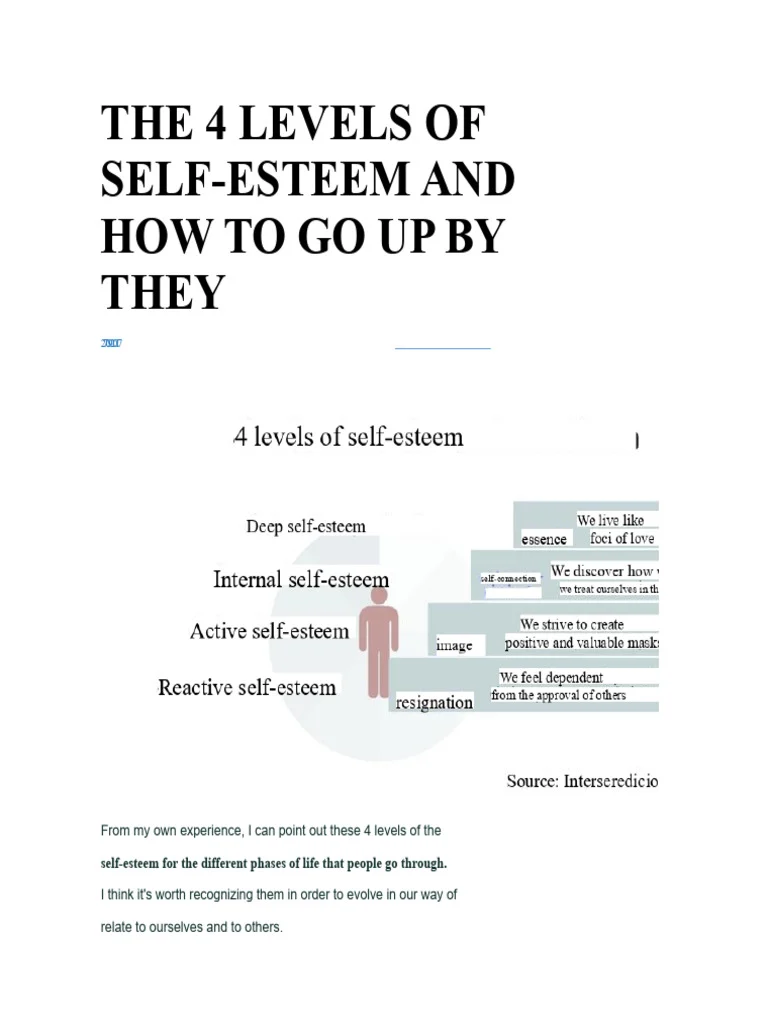

Self-esteem is a person’s overall evaluation of their own worth. It is not the same as self-confidence, which usually refers to trust in a specific skill. Self-esteem forms gradually from experiences, relationships, and messages received over time and can be improved with realistic habits and support.
Self-esteem is one of the most common terms in everyday conversation about mental health, yet it is often confused with related ideas. The American Psychological Association defines self-esteem as an evaluative attitude toward oneself. That definition captures two important points: self-esteem is an evaluation, not a fixed trait, and it is global rather than tied to one performance. People form this evaluation gradually from experiences, relationships, and the messages they receive from family, peers, and culture. Understanding this basic definition helps explain why self-esteem can shift over time and why it matters for daily wellbeing.
What does self-esteem mean?
Self-esteem is a person’s overall judgment of their own worth. In everyday language, self-worth and self-esteem are often used as synonyms, and both point to how positively or negatively a person regards themselves as a whole. The American Psychological Association’s dictionary definition describes it as “an evaluative attitude toward oneself,” which means it can be positive, negative, or mixed. Two related terms help clarify the concept. Self-concept is the broader set of beliefs a person holds about who they are, including roles, traits, and values. Self-efficacy is the belief in one’s ability to complete a task or reach a goal. Some researchers treat self-esteem as one part of self-concept, filtered through self-evaluation. Self-esteem can also be measured as a general trait or as a more temporary state, depending on the research context. For most readers, the practical point is that self-esteem is not a list of abilities but a feeling about the person behind those abilities. For a closer look at how these terms work together, see what self-esteem means in more depth.
Self-Esteem vs Self-Confidence: What’s the Difference?
People often use self-esteem and self-confidence interchangeably, but the American Psychological Association keeps the two ideas distinct. Confusion between them is understandable, because a person’s confidence can feed into how they see themselves overall. In short, confidence answers “Can I do this?” while self-esteem answers “Do I have value?”
| Self-esteem | Self-confidence |
|---|---|
| Global evaluation of one’s own worth as a person | Trust in one’s ability in a specific task or area |
| Develops gradually from many experiences and relationships | Can change more quickly with practice in one domain |
| Example: “I am a worthwhile person even when I make mistakes” | Example: “I am confident I can give a presentation, but I feel unsure about learning Spanish” |
A person can have strong public speaking confidence while still struggling with low overall self-esteem, or the reverse. The practical difference matters because building confidence often focuses on skills, while building self-esteem involves changing broader patterns of self-evaluation. Self-confidence can improve quickly after a class or a successful project, while self-esteem often moves more slowly because it draws on a longer personal history.
The Three Levels of Self-Esteem: Low, Healthy, and High
Researchers often describe self-esteem along a spectrum rather than as a single score. The Rosenberg Self-Esteem Scale, developed by Morris Rosenberg in 1965, is the classic self-report instrument used to measure this spectrum; the full scale is not reproduced here.
| Level | Common signs | Everyday example |
|---|---|---|
| Low | Persistent self-criticism; fear of rejection; trouble accepting compliments; avoidance of challenges | A person assumes they will fail an application before finishing it |
| Healthy | Can acknowledge strengths and weaknesses; tolerates criticism without collapsing; can ask for help | A person feels disappointed after a mistake but still sees themselves as capable |
| High | Stable self-worth that does not depend on constant approval; accepts limits while recognizing strengths | A person speaks up in a meeting without needing every comment to be praised |
These categories are not clinical labels. Day-to-day self-esteem can move, and many people recognize themselves in more than one row depending on stress, relationships, and recent events. Public health sources such as the National Institute of Mental Health describe self-esteem as one factor in overall mental health rather than a diagnosis by itself. For a deeper look at the models behind these levels, see the psychology behind self-esteem.
Where Self-Esteem Comes From
Self-esteem does not appear suddenly. According to the American Psychological Association’s topic page on self-esteem, early experiences, family relationships, school and work environments, and cultural messages all contribute. Childhood is often a foundation: children who receive consistent care and realistic praise tend to develop more stable self-worth. Relationships later in life continue to shape it, as friends, partners, and coworkers offer feedback that can support or undermine a person’s view of themselves. Social comparison also plays a role, especially when people measure themselves against idealized images on social media. Culture also sets expectations about achievement, appearance, and identity, and those expectations can shape how people judge themselves against others. Genetics may play a modest role as well, although environment and experience are usually stronger influences in the research literature. There is rarely a single cause; low or high self-esteem usually reflects a pattern built over years. What matters for most people is not a single cause but a repeated set of messages over time.
- Early family messages and attachment patterns
- Feedback from teachers, peers, and partners
- Social comparison, including online comparison
- Broader cultural expectations about achievement, appearance, and identity
For a structured overview of these influences, see factors that shape self-esteem.
Signs Your Self-Esteem Is Low
Low self-esteem often shows up as a repeating inner voice rather than a single dramatic event. Common signs include:
- Persistent self-criticism that continues even after success
- Fear of rejection that leads to avoiding new relationships or opportunities
- Trouble accepting compliments, often deflecting praise as luck
- Avoidance of challenges because failure feels like a verdict on the whole self
People with low self-esteem often feel like an imposter even when evidence says otherwise. They may also over-apologize or stay quiet to avoid judgment. Not everyone shows every sign, and the signs can look different from one person to the next. These signs overlap with everyday nervousness, so occasional self-doubt is not the same as low self-esteem. The pattern matters: when several signs last for weeks or months and interfere with work, study, or relationships, they may point to deeper struggles. For how this pattern affects daily life, see how low self-esteem affects daily life.
How to Build Healthier Self-Esteem
Research suggests that self-esteem can change with sustained habits, not quick fixes. No single habit works for everyone, and improvement tends to be gradual. The American Psychological Association’s topic page points to several realistic practices, and cognitive reframing is one core skill: noticing a harsh thought and testing it against facts rather than accepting it as truth.
- Notice self-critical thoughts and replace exaggerated labels with specific, fair descriptions.
- Set small, realistic goals that can be met and observed.
- Practice self-compassion by speaking to yourself as you would to a friend.
- Limit social comparison, especially on social media, by curating what you view.
- Strengthen supportive relationships and accept help when it is offered.
Cognitive reframing works best when it is practiced in small moments, not only in a crisis. Small repeated actions tend to work better than occasional grand gestures. For a fuller set of steps, see practical steps to improve self-esteem and daily habits that support self-esteem.
Where to Go From Here
Understanding the basics is a starting point. Exploring one guide at a time, instead of trying to change everything at once, can make the material easier to apply. If low self-esteem causes ongoing distress or interferes with daily life, a licensed mental health professional can help identify patterns and build skills. In the U.S., the 988 Lifeline is available by call or text for anyone in crisis. General information about self-esteem does not replace advice from a qualified professional.
FAQ
What is self-esteem in simple words?
It is how a person judges their own worth or value overall.
How is self-esteem different from confidence?
Confidence is tied to specific tasks; self-esteem is global self-evaluation.
What causes low self-esteem?
Criticism, neglect, social comparison and early experiences; usually not a single cause.
How do I know if my self-esteem is low?
Persistent self-criticism, fear of rejection, trouble accepting compliments, avoidance of challenges.
Can self-esteem be improved?
Research suggests gradual improvement with realistic habits, supportive relationships and sometimes professional help.
Sources
American Psychological Association. APA Dictionary of Psychology, “Self-Esteem.”
American Psychological Association. “Self-esteem” topic page.
Rosenberg, Morris. Society and the Adolescent Self-Image. Princeton University Press, 1965.
Keep reading