
1 year ago · Updated 1 year ago
- Introduction
- Understanding Self-Esteem
- Step 1: Challenge Negative Self-Talk
- Step 2: Practice Self-Compassion
- Step 3: Set Realistic Goals
- Step 4: Build Healthy Relationships
- Step 5: Limit Social Comparison
- Step 6: Take Care of Your Body
- Step 7: Seek Professional Help if Needed
- Daily Habits That Improve Self-Esteem
- Conclusion
- FAQs About Improving Self-Esteem
Introduction
Self-esteem is the foundation of mental health, relationships, and personal growth. When self-esteem is low, even small challenges can feel overwhelming. The good news is that self-esteem is not fixed—it can be nurtured and strengthened at any stage of life.
This guide will walk you through evidence-based strategies, psychological insights, and practical tips on how to improve self-esteem for long-term confidence and resilience.
Understanding Self-Esteem
Before improving it, it’s important to understand what self-esteem is. Self esteem is your overall sense of self-worth—how much you like, accept, and respect yourself.
Improving self-esteem doesn’t mean avoiding self-doubt altogether. It means learning to:
- Recognize your strengths and weaknesses.
- Accept yourself unconditionally.
- Develop resilience in the face of setbacks.
Step 1: Challenge Negative Self-Talk
Negative self-talk is one of the biggest enemies of self esteem. Thoughts like “I’m not good enough” or “I always fail” reinforce insecurity.
How to reframe negative thoughts:
- Awareness: Notice when you’re being self-critical.
- Evidence check: Ask yourself, “Is this thought based on facts or assumptions?”
- Replace it: Transform “I can’t do this” into “I will try, and it’s okay to learn along the way.”
Psychologists often use Cognitive Behavioral Therapy (CBT) techniques to help reframe destructive thought patterns.
Step 2: Practice Self-Compassion
Self-compassion means treating yourself with the same kindness you would show a friend. Research by Dr. Kristin Neff shows that self-compassion is strongly linked to higher self esteem.
Ways to practice:
- Speak kindly to yourself.
- Forgive yourself for mistakes.
- Avoid perfectionism.
- Use affirmations that focus on acceptance, not just success.
Step 3: Set Realistic Goals
Setting achievable goals builds a sense of competence and progress.
- Break large tasks into smaller steps.
- Celebrate small wins along the way.
- Focus on growth, not perfection.
This process rewires the brain to associate effort with accomplishment, boosting self-esteem naturally.
Step 4: Build Healthy Relationships
Surrounding yourself with supportive people is essential. Toxic relationships that involve constant criticism, manipulation, or disrespect can erode self esteem.
What helps:
- Choose relationships that uplift and encourage you.
- Set boundaries to protect your emotional well-being.
- Seek communities or groups that share your values.
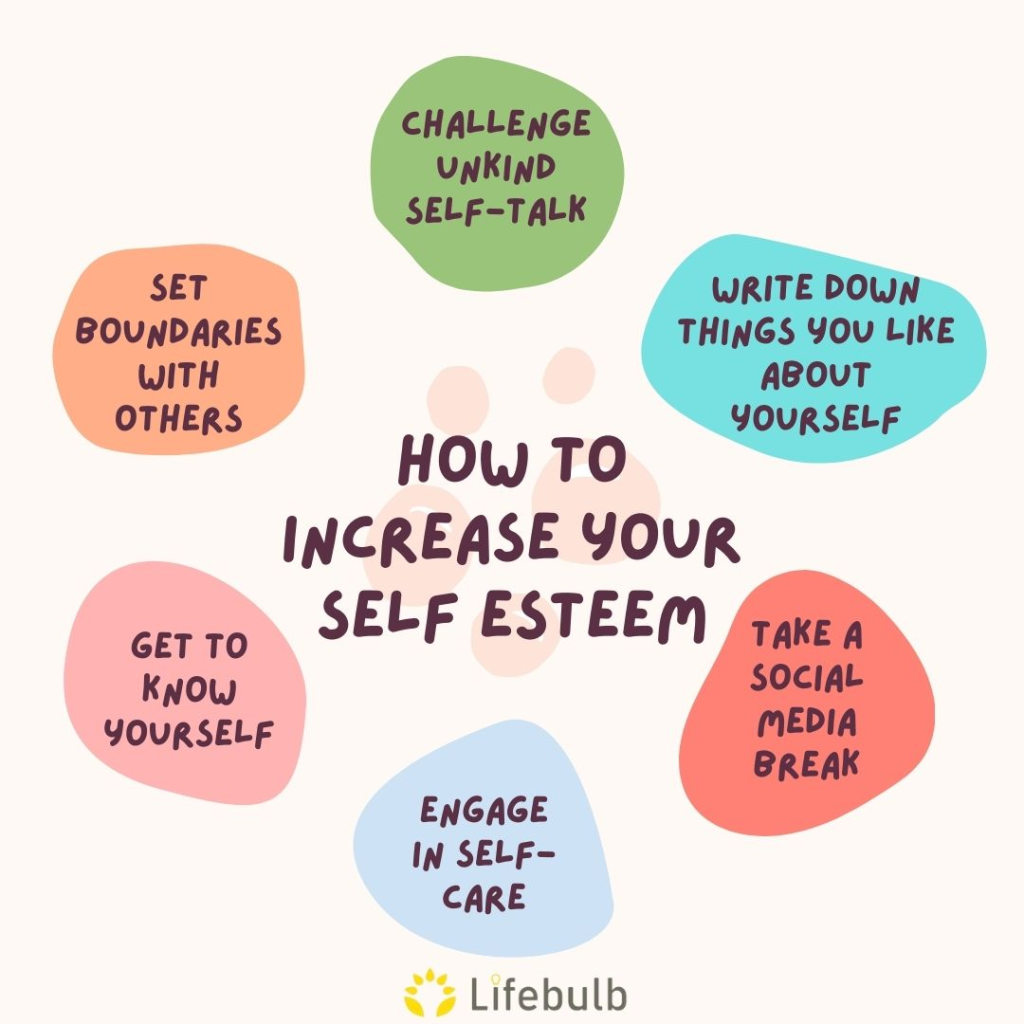
According to Social Comparison Theory, people naturally measure themselves against others. On social media, this can become toxic.
How to reduce harmful comparisons:
- Unfollow accounts that trigger insecurity.
- Practice gratitude for your own progress.
- Focus on your unique path instead of competing with others.
Step 6: Take Care of Your Body
Physical well-being is strongly tied to self-esteem. When you treat your body well, you reinforce the belief that you are worthy of care.
- Exercise regularly to release endorphins.
- Maintain a balanced diet.
- Prioritize sleep.
- Avoid harmful coping mechanisms like substance abuse.
Step 7: Seek Professional Help if Needed
Sometimes self esteem struggles are linked to deeper issues such as trauma, depression, or anxiety. Therapy can provide tools for healing and rebuilding self-worth.
Popular therapeutic approaches include:
- Cognitive Behavioral Therapy (CBT)
- Acceptance and Commitment Therapy (ACT)
- Mindfulness-based therapies
Daily Habits That Improve Self-Esteem
- Gratitude journaling → Write down 3 things you’re proud of daily.
- Mirror practice → Say positive affirmations out loud.
- Acts of kindness → Helping others reinforces your sense of value.
- Learning new skills → Expanding abilities strengthens confidence.
Conclusion
Improving self-esteem is not an overnight process. It’s a lifelong journey of self-discovery, acceptance, and growth. By challenging negative thoughts, practicing self-compassion, building healthy relationships, and focusing on personal progress, you can create lasting confidence that supports every area of life.
Remember: you are worthy, capable, and deserving of respect—both from others and from yourself.
FAQs About Improving Self-Esteem
1. What is the fastest way to improve self esteem?
Small daily actions like practicing gratitude, positive self-talk, and celebrating small wins can create quick improvements.
2. Can therapy help improve self-esteem?
Yes. Evidence-based therapies like CBT are highly effective in building self esteem and breaking negative thought cycles.
3. How can I stop comparing myself to others?
Limit exposure to triggering media, focus on gratitude, and remind yourself that each person’s journey is unique.
4. Is self-esteem the same as self-confidence?
No. Self-esteem is your overall self-worth, while confidence is belief in your abilities in specific situations.
5. Can self-esteem improve at any age?
Absolutely. Self-esteem can grow at any stage of life with awareness, effort, and supportive environments.