
1 year ago · Updated 1 year ago
- Introduction
- Why Daily Habits Matter for Self-Esteem
- 1. Practice Positive Self-Talk
- 2. Set Small, Achievable Goals
- 3. Prioritize Physical Health
- 4. Practice Gratitude
- 5. Limit Social Comparison
- 6. Learn to Say “No”
- 7. Celebrate Effort, Not Just Results
- 8. Surround Yourself with Supportive People
- 9. Engage in Acts of Kindness
- 10. Practice Mindfulness and Self-Compassion
- Putting It All Together: Building a Daily Routine
- Conclusion
- FAQs About Daily Habits to Boost Self-Esteem
Introduction
Self-esteem is not something that magically appears—it is cultivated daily through consistent habits and choices. While therapy, reflection, and support are powerful tools, what truly strengthens self-worth is how we treat ourselves in everyday life.
This article explores daily habits to boost self-esteem over time. By making small but intentional changes, you can reshape how you think, feel, and act in ways that reinforce confidence and self-acceptance.
Why Daily Habits Matter for Self-Esteem
Self-esteem is not built from one single success or affirmation. Instead, it grows from the cumulative impact of daily routines. Just as poor habits like negative self-talk can weaken confidence, positive habits—practiced regularly—create new mental pathways that strengthen resilience.
Neuroscience shows that repetition wires the brain. When we choose healthy, affirming actions every day, we teach ourselves to view life and our abilities through a lens of worthiness.
1. Practice Positive Self-Talk
The way we speak to ourselves directly affects our self-image. Harsh inner criticism fuels insecurity, while encouraging self-talk builds confidence.
- Replace “I always fail” with “I didn’t succeed this time, but I can learn and try again.”
- Keep a list of affirmations like: “I am capable,” “I am worthy of love,” or “My value is not defined by mistakes.”
- Speak to yourself as you would to a supportive friend.
Tip: Spend 5 minutes each morning saying or writing affirmations that feel authentic and motivating.
2. Set Small, Achievable Goals
Nothing strengthens self-esteem like experiencing success, no matter how small. Break larger tasks into smaller, manageable steps. Each accomplishment reinforces the belief that you are capable and resourceful.
- Instead of “I will completely change my diet,” start with “I will drink one more glass of water today.”
- Track your progress in a journal or app to visualize growth.
Over time, consistent small wins build momentum and inner confidence.
3. Prioritize Physical Health
The mind and body are deeply connected. Taking care of your physical health boosts mood and supports self-esteem.
- Exercise: Movement releases endorphins and reduces stress. Even 20 minutes of walking daily helps.
- Nutrition: Balanced meals stabilize energy and improve focus.
- Sleep: Rest regulates emotions and enhances mental clarity.
Caring for your body is a daily reminder that you are worth the effort.
4. Practice Gratitude
Gratitude shifts focus from what is missing to what is already valuable in life. This reframing fosters self-acceptance and joy.
- Write down 3 things you are grateful for each evening.
- Express gratitude to others—saying “thank you” nurtures connection and positivity.
- Include yourself in gratitude: “I’m grateful for my persistence today.”
By recognizing strengths and blessings, gratitude combats the habit of self-comparison.
Constant comparison—especially on social media—undermines self-esteem. It distorts reality and makes others’ curated lives seem better than yours.
- Set boundaries with social media use, such as limiting scrolling time.
- Follow accounts that inspire, not those that trigger self-doubt.
- Remind yourself: everyone struggles, even if it’s not visible online.
Reducing comparisons frees you to value your unique journey.
6. Learn to Say “No”
People with low self-esteem often overextend themselves to gain approval. Learning to say “no” establishes boundaries and affirms your worth.
- Start small—decline commitments that drain your energy.
- Replace guilt with self-respect: “Saying no to this means saying yes to my well-being.”
- Boundaries protect self-esteem by reinforcing that your needs matter.
7. Celebrate Effort, Not Just Results
Perfectionism damages self-esteem by making worth conditional on flawless performance. Shift the focus to effort and growth.
- Instead of saying “I failed,” say “I showed up and tried—next time I’ll do better.”
- Celebrate small progress, even if the final outcome isn’t perfect.
This growth mindset fosters resilience and reduces fear of failure.
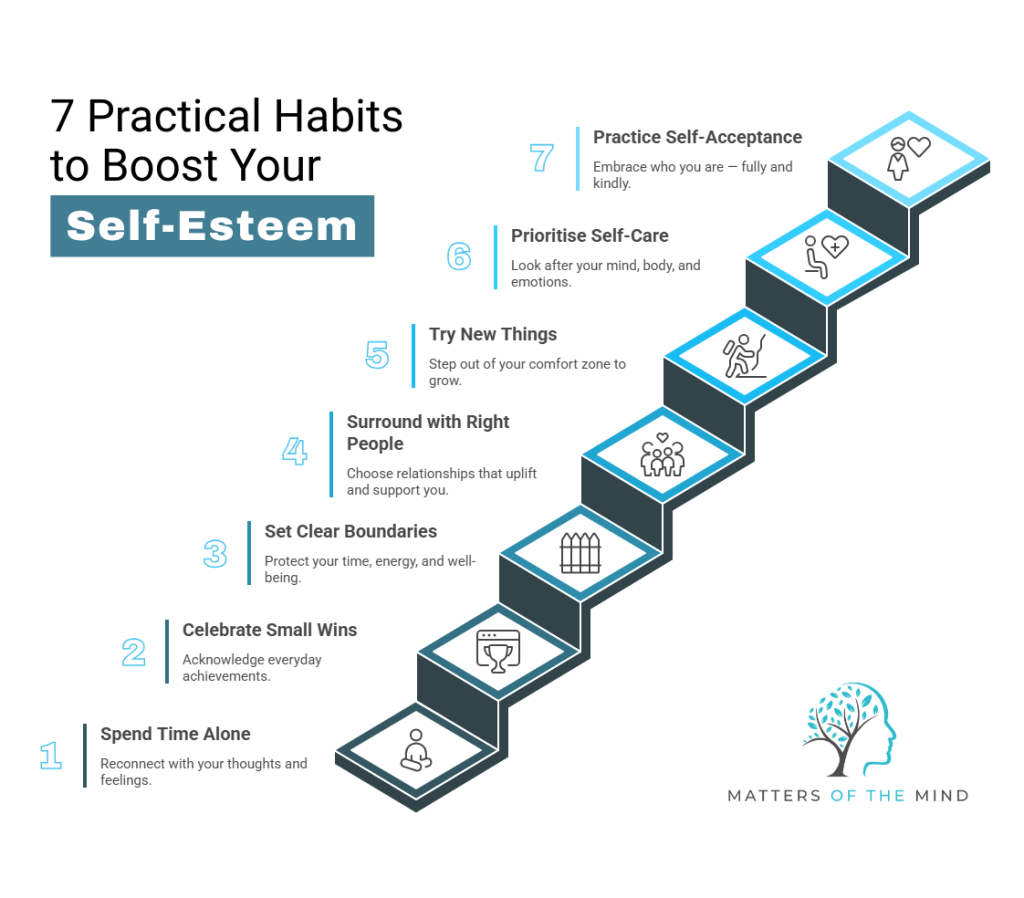
8. Surround Yourself with Supportive People
Self-esteem is strongly influenced by relationships. Surrounding yourself with people who uplift, respect, and encourage you reinforces self-worth.
- Seek out friendships that feel reciprocal and nurturing.
- Limit exposure to people who are critical, manipulative, or dismissive.
- Join communities—online or offline—where positivity and growth are valued.
9. Engage in Acts of Kindness
Helping others not only benefits them but also boosts your self-worth by affirming that you can make a difference.
- Volunteer for causes you care about.
- Perform small daily acts of kindness: holding the door, listening attentively, or offering encouragement.
Psychological studies show that altruism increases feelings of competence and purpose.
10. Practice Mindfulness and Self-Compassion
Mindfulness teaches us to observe thoughts without judgment. Combined with self-compassion, it helps reduce harsh inner criticism.
- Spend 5–10 minutes each day in mindful breathing or meditation.
- When facing mistakes, say: “It’s human to make errors—I can learn from this.”
- Treat yourself as kindly as you would treat someone you love.
This daily practice fosters resilience and inner peace.
Putting It All Together: Building a Daily Routine
Self-esteem doesn’t grow from one grand change but from small consistent steps. An example daily routine might look like:
- Morning: Positive affirmations + 10-minute walk.
- Afternoon: Focus on small goals and celebrate progress.
- Evening: Gratitude journal + self-compassion reflection.
The key is consistency. Even if you start with one habit, practicing it daily can rewire your mindset and gradually transform self-esteem.
Conclusion
Self-esteem is built in the small choices we make every day. By practicing positive self-talk, setting achievable goals, prioritizing health, and cultivating gratitude and self-compassion, you create a foundation of confidence that lasts.
These daily habits may seem simple, but their power lies in consistency. Over time, they shift how you see yourself—not as someone constantly falling short, but as someone worthy, capable, and resilient.
FAQs About Daily Habits to Boost Self-Esteem
1. How long does it take for daily habits to improve self-esteem?
Changes can be felt within weeks, but long-term improvement often takes months of consistent practice.
2. What is the easiest habit to start with?
Gratitude journaling or positive self-talk are simple and powerful first steps.
3. Can small habits really change self-esteem?
Yes—self-esteem is built from repeated experiences. Small, consistent wins accumulate into stronger self-worth.
4. Do I need to follow all 10 habits at once?
No. Start with one or two, then add more as they become routine.
5. What if I struggle to maintain daily habits?
Be compassionate with yourself. Missing a day doesn’t erase progress. Restart gently and consistently.