

Self-esteem books work best when matched to the issue: a CBT workbook for unhelpful patterns, an ACT guide for self-criticism, or an illustrated read for students. This guide compares eight evidence-informed titles, explains how each was selected, and notes when a book supports—but does not replace—professional help.
- What Is the Difference Between Confidence and Self-Esteem?
- How We Selected These Self-Esteem Books
- Self-Esteem Books Compared: 8 Titles at a Glance
- Best Self-Esteem Books for Adults by Goal
- Self-Esteem Books for Students and Classrooms
- What Self-Esteem Books Can and Cannot Do
- Frequently Asked Questions
- Sources and Disclaimer
What Is the Difference Between Confidence and Self-Esteem?
According to the American Psychological Association, self-esteem is a person's overall evaluation of their own worth; confidence is usually tied to a specific task or situation. A person can feel confident in public speaking but still hold a low view of their overall worth. Self-concept refers to the broader set of beliefs about oneself, and self-efficacy is the belief in one's ability to complete a task. The distinction matters because a book focused on confidence may help someone prepare for a presentation, while a self-esteem book is more likely to explore the general sense of worth that shows up across situations. See more about what self-esteem is and how it differs from confidence. This distinction matters when choosing a book because marketing often uses the terms interchangeably, though they describe different things.
How We Selected These Self-Esteem Books
We looked for authors with clinical training or a recognized editorial background, an explicit approach such as cognitive behavioral therapy (CBT), acceptance and commitment therapy (ACT), or self-compassion, and a clear audience and format. We favored titles that state what they teach rather than promise fast results. When a book references a validated scale, such as the Rosenberg Self-Esteem Scale, we describe the scale but do not reproduce it. The comparison separates structured workbooks from narrative reads and adult titles from classroom picture books. No title is included simply because it is popular; each row lists the approach, audience, and format a reader can expect. A title with a clear approach is easier to match to a specific goal.
Self-Esteem Books Compared: 8 Titles at a Glance
The table below groups eight titles by approach, audience, and format.
| Title / Author | Approach | Audience | Format | What it adds |
|---|---|---|---|---|
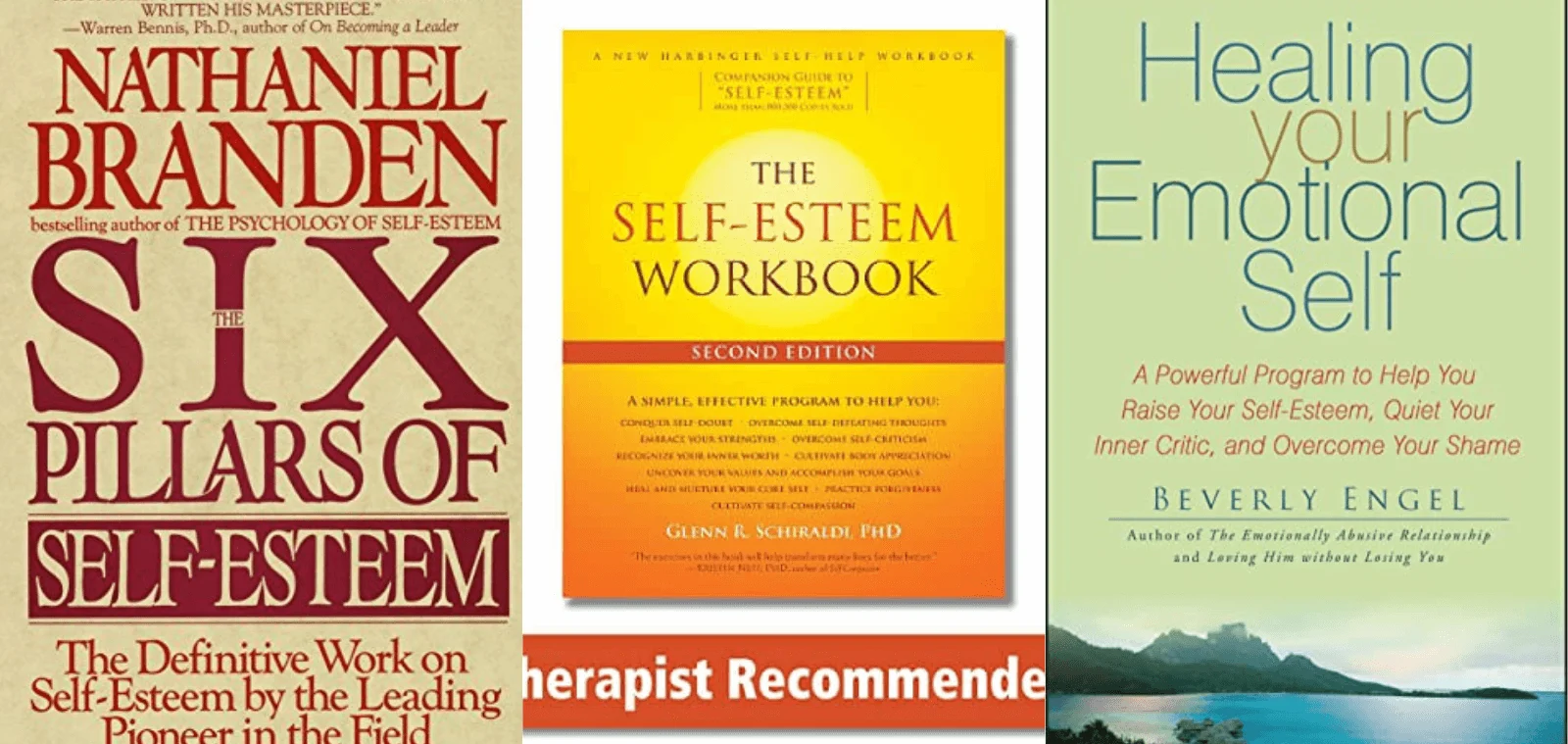
| The Six Pillars of Self-Esteem (Nathaniel Branden) | Foundations of self-esteem | Adults | Book | Core principles for examining self-worth |
| The Confidence Gap (Russ Harris) | ACT, cognitive defusion | Adults | Book | Skills for responding to self-criticism without fusion |
| The Self-Esteem Workbook (Glenn Schiraldi) | CBT, structured exercises | Adults | Workbook | Step-by-step practice for unhelpful patterns |
| Ten Days to Self-Esteem (David Burns) | CBT, short program | Adults | Workbook | Brief structured exercises for mood and self-worth |
| Self-Compassion (Kristin Neff) | Self-compassion | Adults | Book | Research-informed self-kindness instead of harsh judgment |
| The Confidence Code (Katty Kay and Claire Shipman) | Confidence in girls and women | Adults, especially women | Book | Journalistic look at confidence and risk-taking |
| You Are a Badass (Jen Sincero) | Motivational self-help | Adults | Book | Energetic, anecdote-driven perspective, without clinical claims |
| Be Who You Are / I Like Myself (Todd Parr / Karen Beaumont) | Positive self-concept | Students, young children | Illustrated picture books | Simple, affirming classroom reads |
Two titles in the table are motivational rather than clinical: You Are a Badass does not claim clinical evidence, and the picture books are classroom supports rather than treatment tools. The remaining six titles name a therapeutic approach or a research-informed framework. Grouping them this way shows why a reader may need more than one book across different goals.
Best Self-Esteem Books for Adults by Goal
Because many factors that shape self-esteem, the titles below are grouped by the goal each one serves.
- For a harsh inner critic: Self-Compassion by Kristin Neff offers a research-informed alternative to self-judgment. Neff describes self-compassion as treating oneself kindly, recognizing shared human experience, and noticing painful feelings mindfully. This approach is useful when the default response to mistakes is harsh self-talk.
- For structured skills practice: The Self-Esteem Workbook by Glenn Schiraldi and Ten Days to Self-Esteem by David Burns both draw on cognitive behavioral therapy. The first works as a longer, skills-based program with exercises that target negative self-talk; the second offers a shorter structured format with daily exercises.
- For defusion from self-critical thoughts: The Confidence Gap by Russ Harris adapts acceptance and commitment therapy, emphasizing cognitive defusion—noticing self-critical thoughts without being guided by them. The book also introduces acceptance and values-based action.
- For core principles: The Six Pillars of Self-Esteem by Nathaniel Branden remains a foundational read about the practices behind self-worth. Its six pillars are practices such as living consciously and self-acceptance.
For readers specifically interested in confidence in girls and women, The Confidence Code by Katty Kay and Claire Shipman is a related journalistic read rather than a self-esteem workbook. What these goals share is an explicit approach—CBT, ACT, or self-compassion—rather than a set of quick tricks. Some readers prefer to start with a workbook when structure helps; others prefer a narrative book when the inner critic is the main obstacle. For readers whose self-criticism is amplified by comparisons on social platforms, defusion skills can also help; see how social media and self-worth interact.
Self-Esteem Books for Students and Classrooms
Picture books work as read-alouds rather than clinical tools; they introduce the idea that differences are acceptable. Be Who You Are by Todd Parr reassures young children that differences in appearance, interests, and family are acceptable; its simple pages suit preschool and early elementary classrooms. I Like Myself by Karen Beaumont uses playful rhymes to describe self-acceptance; teachers often pair it with discussions about individual strengths. The Name Jar by Yangsook Choi follows a child who is uncertain about her name after moving to the U.S.; it opens conversations about identity and belonging. Because how self-esteem changes from childhood to adulthood, classroom reads are a starting point rather than a full intervention. Teachers and caregivers can leave room for questions after reading; adolescents may move from picture books to a structured workbook or The Confidence Gap.
What Self-Esteem Books Can and Cannot Do
According to the National Institute of Mental Health, psychotherapy approaches such as cognitive behavioral therapy and acceptance and commitment therapy are evidence-supported treatments for some mental health conditions. A book can introduce those skills or offer a way to begin reflecting, but it is not a substitute for therapy. Persistent low mood, anxiety, or thoughts of self-harm should be discussed with a licensed mental health professional. Low self-esteem can affect mental health in several ways, as described in how low self-esteem affects mental health. Some workbooks include mood logs or exercises derived from clinical approaches; these can be useful for self-reflection but are not designed to diagnose. A book is a starting point, not a diagnosis, and no book should delay help when distress is severe. In the U.S., the 988 Suicide & Crisis Lifeline is available by call or text.
Frequently Asked Questions
What is the best self-esteem book overall? There is no single best book; the choice depends on the problem. The Self-Esteem Workbook suits structured CBT practice, The Confidence Gap suits ACT, and Self-Compassion suits self-criticism. The best choice matches the issue a reader notices most.
What is the difference between confidence and self-esteem? Confidence is tied to a specific task, while self-esteem is the overall evaluation of one's own worth, according to the American Psychological Association. A person can be confident in one area and still have low self-esteem overall.
Are self-esteem books a substitute for therapy? No. Books can support learning, but persistent distress should be discussed with a licensed professional. In the U.S., the 988 Lifeline is available by call or text. Therapy offers individualized support that books cannot replace.
Which self-esteem book is best for a student? For younger students, Be Who You Are and I Like Myself work well. Adolescents may start with a workbook or The Confidence Gap. Picture books support early conversations; older students often prefer a workbook or an ACT-based read.
Sources and Disclaimer
Sources: American Psychological Association, National Institute of Mental Health, 988 Suicide & Crisis Lifeline. This information is educational and does not replace professional diagnosis or treatment.
Keep reading