What is Self-Esteem? A Complete Guide in 2025

Introduction
Self-esteem is one of the most essential concepts in psychology and human development. It influences how we think, feel, and behave in everyday life. People with healthy self esteem are more likely to pursue opportunities, build meaningful relationships, and cope with challenges, while those with low self esteem often struggle with self-doubt, anxiety, and unhealthy patterns.
But what is self-esteem?, how does it develop, and why does it matter so much? This guide offers a comprehensive overview of self esteem, drawing from psychology, sociology, and personal growth practices.
Defining Self-Esteem
Psychologists generally define self-esteem as a person’s overall evaluation of their own worth or value. Unlike self-confidence, which relates to specific skills or achievements, self esteem reflects a broader sense of self-acceptance and self-respect.
Key elements include:
- Self-worth → believing you are deserving of respect and love.
- Self-competence → confidence in your ability to handle challenges.
- Self-acceptance → recognizing strengths and weaknesses without harsh self-criticism.
The American Psychological Association (APA) defines self esteem as the degree to which an individual values, approves of, appreciates, or likes themselves.
Why Self Esteem Matters
Self esteem is not just about feeling good—it plays a crucial role in mental health, motivation, and social relationships.
- Mental health → Low self-esteem is strongly linked with depression, anxiety, and eating disorders.
- Relationships → Healthy self esteem allows people to set boundaries, avoid toxic dynamics, and build mutual respect.
- Performance → A balanced sense of worth fosters resilience in education, work, and creative pursuits.
- Overall well-being → People with healthy self esteem tend to experience greater life satisfaction and optimism.
Research shows that self esteem is both a protective factor and a motivator, shaping the way individuals navigate successes and failures.
Theories of Self-Esteem
William James (1890s)
The American philosopher and psychologist William James defined self esteem as the ratio between successes and pretensions—how well we live up to our goals and expectations.
Carl Rogers and Humanistic Psychology
Carl Rogers emphasized the importance of unconditional positive regard. He argued that self-esteem grows when individuals feel accepted for who they truly are, not only for what they achieve.
Maslow’s Hierarchy of Needs
In Maslow’s pyramid, esteem needs (respect, recognition, status) sit just below self-actualization. This suggests that self esteem is essential for growth and fulfillment.
Sociometer Theory (Mark Leary)
This modern theory proposes that self esteem acts as a social monitor, reflecting how included or excluded we feel in relationships and groups.
Self-Determination Theory (Deci & Ryan)
This approach highlights the role of autonomy, competence, and relatedness in building healthy self-esteem.
Types of Self-Esteem
Psychologists often distinguish between different forms of self esteem:
- High self esteem → Generally positive self-view, confidence, and resilience.
- Low self-esteem → Feelings of inadequacy, self-doubt, and vulnerability to stress.
- Fragile or contingent self esteem → Dependent on achievements or validation from others.
- Stable self esteem → Consistent self-worth that remains steady despite challenges.
It’s important to note that healthy self esteem is not arrogance or narcissism—it’s a balanced view of oneself with both strengths and imperfections.
How Self-Esteem Develops
Childhood
Early relationships with caregivers strongly influence self esteem. Consistent love, encouragement, and guidance build a foundation of security and self-worth.
Adolescence
During teenage years, peer acceptance, body image, and identity formation play key roles. This stage often brings fluctuations in self-esteem.
Adulthood
Work achievements, romantic partnerships, and social roles shape self esteem. A sense of competence and belonging supports stability.
Older Adulthood
Later in life, self esteem may depend more on acceptance, wisdom, and life perspective rather than external validation.
Measuring Self-Esteem
Psychologists use different methods to assess self esteem:
- Rosenberg Self Esteem Scale (RSES) → A widely used 10-item questionnaire measuring global self-worth.
- State Self Esteem Scale → Evaluates momentary fluctuations.
- Implicit Association Tests → Explore unconscious attitudes about self-worth.
These tools help researchers and clinicians understand how self esteem operates across different populations.
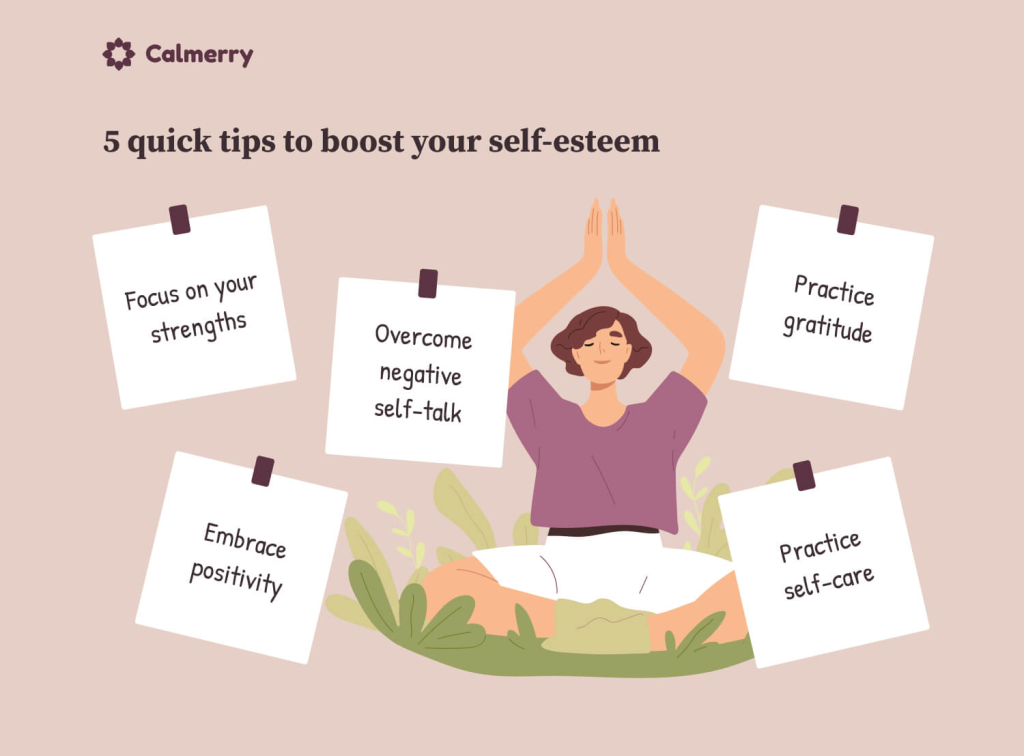
Improving Self Esteem
While self esteem is shaped by early experiences and environment, it can be improved at any stage of life through intentional practices:
- Cognitive Behavioral Therapy (CBT) → Reframes negative thought patterns.
- Mindfulness and Self-Compassion → Encourage acceptance without judgment.
- Daily Habits → Gratitude journaling, affirmations, setting achievable goals.
- Social Support → Healthy relationships provide validation and belonging.
See our page on How to Improve Self Esteem for a complete guide.
Common Misconceptions About Self-Esteem
- Self esteem equals narcissism → False. Narcissism involves inflated self-importance; healthy self-esteem is balanced.
- Self esteem is fixed → False. It can be developed and strengthened over time.
- Success automatically builds self esteem → Not always. If self-worth depends only on external success, it remains fragile.
Resources and Further Reading
- APA Dictionary of Psychology – Link
- Verywell Mind – Self Esteem – Link
- Rosenberg, M. (1965). Society and the Adolescent Self-Image.
Explore more in our blog section:
FAQs About Self-Esteem
1. What is the official definition of self esteem?
Self-esteem is the overall evaluation of one’s own worth, combining self-worth, self-acceptance, and competence.
2. How is self esteem different from self-confidence?
Confidence relates to abilities in specific areas, while self esteem is a broader sense of overall value and self-respect.
3. What are the main theories of self-esteem?
They include William James’ ratio model, Rogers’ unconditional positive regard, Maslow’s hierarchy, Sociometer Theory, and Self-Determination Theory.
4. Can self esteem change over time?
Yes. Self esteem evolves with experiences, relationships, and personal growth, and can be improved at any life stage.
5. How do psychologists measure self-esteem?
Through tools like the Rosenberg Self-Esteem Scale, State Self-Esteem Scale, and implicit association measures.